Turning a sloped yard into something functional and beautiful is not an exercise in compromise, it is an opportunity. Vancouver BC poses particular demands and rewards for homeowners who face grades, gullies, and hills. With heavy winter rains, variable sun depending on exposure, and dense urban lots, terraces and slope-specific design create usable outdoor rooms, protect soil and foundations, and add long-term value. The trick is to balance drainage, durability, and horticultural choices with an aesthetic that suits the Pacific northwest.
Why slopes deserve more than a quick fix Sloped properties often trigger a reflex to flatten and pave, but that choice brings problems: stormwater concentration at the base of the slope, loss of permeable surface, and high maintenance for any planted areas left behind. A well-designed terraced scheme breaks a slope into manageable planes, reduces erosion, and creates pockets for planting, seating, and path connections. In Vancouver BC, where municipal bylaws and neighbourhood drainage patterns matter, smart terracing can prevent backyard flooding problems and save you money on long-term repairs.
A short story from a Kitsilano renovation A client in kitsilano had a 30-foot deep yard that dropped roughly 2.2 meters from the back of the house to the alley. The original plan from a developer was concrete steps and an asphalt path leading to a narrow strip of grass. We reimagined it as three terraces: a low-slung dining terrace directly off the house, a middle planting terrace with a rain garden, and an upper lawn framed by native shrubs. The change reduced the velocity of runoff during the heaviest storms, cut the need for a retaining wall by nearly half, and created distinct spaces that truly feel like backyard rooms. The client reported using the yard three times more than before, and neighbours asked for references.
Fundamentals before design You must start with a site analysis. Grade should be measured in slope percentage or rise over run, not guessed. Soil type matters; many Vancouver lots have a clay-rich layer beneath a loam topsoil, which affects drainage and root performance. Exposure to sun and prevailing winds will decide plant choices and where you place seating. Finally, check municipal requirements for retaining walls. In Vancouver BC, any retaining wall above a certain height requires engineered drawings and permits, so designing with multiple smaller terraces can often be both cheaper and more code-friendly than a single tall wall.
Engineering trade-offs Retaining walls can be built from timber, concrete blocks, natural stone, or gabion systems. Timber offers warmth and lower cost up front, but it is vulnerable to rot over 15 to 25 years unless pressure-treated and properly detailed for drainage. Concrete block and poured concrete provide longevity and a clean look, but they are more expensive and require engineered footings for anything over about 1.0 meter in height. Natural stone blends with the landscape and can be dry-stacked in some cases, yet the labor cost is significant. Gabions are great for stormproofing and drainage, but may not suit every aesthetic.
Think about drainage as a primary design element, not a detail. Every terrace needs an outlet for seepage. Weep holes, perforated drain pipes laid behind the wall and sloped to daylight or to a sump, and a gravel backfill reduce hydrostatic pressure. Without these measures, even the most attractive wall will bow or fail over time.
Planting to stabilize and delight Plants on slopes do two jobs, root anchoring and aesthetic performance. For anchoring, choose deep-rooted perennials, shrubs, and groundcovers that form dense mats. For visual interest, layer textures and heights so the slope reads as intentional rather than neglected.
A practical palette for Vancouver BC favours plants that tolerate moisture yet can handle summer dryness on well-drained terraces. Consider evergreen shrubs like rhododendron and laurel for shade, or manzanita and oregon grape for sunny slopes. Native species generally provide the best ecological fit and require less maintenance once established. However, introducing some ornamental grasses and seasonal bulbs livens the composition and extends interest into every season.
One list for a quick planting starter - five reliable landscaping services Vancouver slope plants
- oregon grape, mahonia aquifolium, for shade and year-round structure hebe, small evergreen shrub, for coastal tolerance and flowers carex species, ornamental sedges, for erosion control and texture arctostaphylos uva-ursi, kinnikinnick, a low groundcover for sunny slopes narcissus and allium bulbs, for spring lift and low-maintenance color
Walks, steps, and connections A terrace system is only as useful as the circulation that links its levels. Steps should be comfortable, with risers of 150 to 170 millimeters and treads deep enough to plant along the side without compromising movement. Wider landings at turns or near doors encourage lingering and furnish places for planters or a bench.
Material choices for stairs and paths include poured concrete with a broom finish for durability, bluestone for a high-end finish, or compacted crushed rock with timber edging for a more natural look. Permeable paving reduces runoff and is often required for areas larger than a specific size in many Vancouver neighbourhoods. If you choose permeable materials, consider the sub-base depth and whether you need an underdrain to handle heavy seasonal runoff.
Managing rain in a city built on a rainfall gradient Vancouver sits in a rain belt. Terracing offers a way to slow water, encourage infiltration, and direct excess to storm systems or rainwater harvesting equipment. Rain gardens placed at strategic low points on a terrace can handle concentrated flows from downspouts and terraces above. These features require soils amended with sand and organic matter to avoid clogging, and an overflow route for the largest events.
For homeowners thinking about sustainability, integrating a cistern or rain barrel at an accessible terrace edge provides water for irrigation in drier months. A 1,000-liter cistern will capture a meaningful fraction of typical roof runoff and reduce the need for municipal water during summer. When combined with drip irrigation, this approach keeps newly planted slopes healthy while lowering your water bill.
Materials that age gracefully Concrete looks clean but can feel cold adjacent to lush planting. Timber is warm but ages and needs maintenance. Stone is timeless but costly. My preference in many Vancouver projects is a hybrid approach: use durable structural materials where they have to perform, then soften with timber seating, mossy stone veneers, and generous plantings that will take years to mature. A timber bench attached to a concrete wall, for example, hides the mass of the wall and invites use.
Cost expectations and budgeting Budgetary transparency is essential. For a straightforward terraced yard with three levels, expect to pay per square meter for excavation, materials, and planting. Small timber terraces with gravel paths and modest planting might start at around CAD 200 to 350 per square meter. Stone terraces with engineered walls, imported gravel, and mature plantings commonly start higher, often CAD 500 to 800 per square meter or more. If you need permaculture-style reshaping with big earthmoving machines or engineered drainage and lighting, budget for the upper range. Always factor in a contingency of 10 to 20 percent for unforeseen site conditions, which are common in older Vancouver lots.
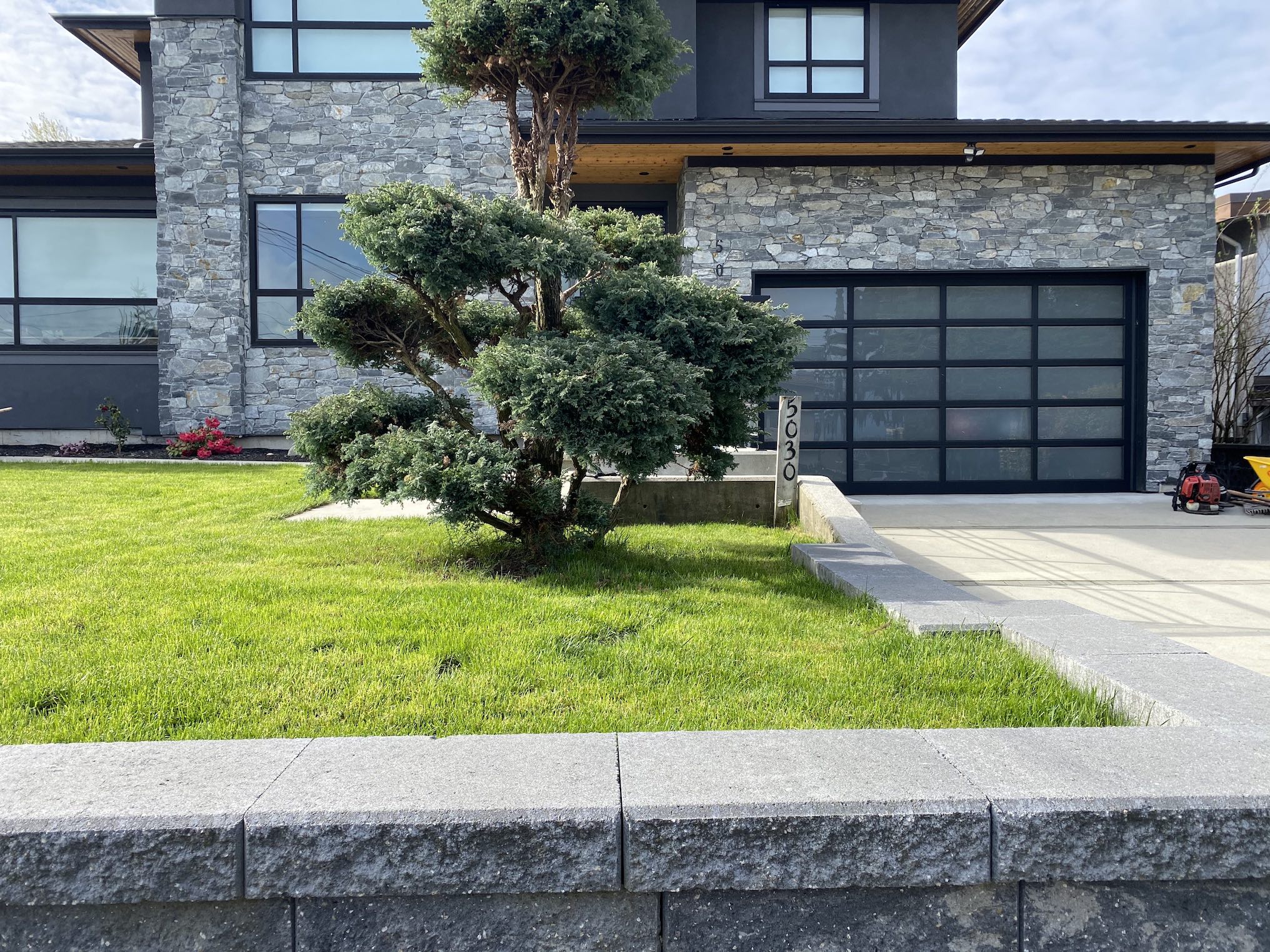
Maintenance realities Terraces reduce mowing by limiting lawn area, but they introduce other maintenance needs: pruning, clearing drains, replacing mulch, and inspecting wall drainage. Install accessible inspection ports or removable gravel access panels behind walls where possible. For clients who want low maintenance, choose long-lived materials and plantings that require only annual pruning and seasonal cleanup.
Anecdote about maintenance trade-offs I once worked on a property where the homeowner insisted on an all-native scheme to minimize upkeep. After two years of establishment, the native shrubs did fine, but volunteers and self-seeding plants filled the narrow upper terrace, creating a need for more frequent pruning. The lesson was simple: lower-maintenance plants exist, but they still mind their space. A tidy, lower-maintenance terrace often combines natives with carefully chosen ornamentals and a clear maintenance plan.
Lighting and furniture choices Lighting makes terraces safe and usable after dusk, and it also showcases textures and plantings. Choose warm, low-voltage LED fixtures for path lighting, and place uplights to accent feature trees or sculptural walls. Keep fixtures low to avoid light pollution into neighbouring windows.
Furniture should match the scale of the terraces. A narrow ledge can host a built-in bench, while a full terrace supports a dining table. Remember weight considerations: if you plan on heavy planters or masonry around a terrace, account for load-bearing capacity, especially near existing foundations.
Permitting and neighbour diplomacy Before moving dirt, check with the City of Vancouver or your municipality about retaining wall heights, setback rules, and stormwater regulations. Communicate with neighbours when your work affects shared boundaries or drainage. In some cases, hiring an engineer to specify rod anchors or tie-backs is required for walls that hold back more than a specified height. This may add to cost but is necessary for safety and longevity.
When to bring in professionals Small cosmetic terracing and planting can be approached as DIY for experienced gardeners, but anything involving structural retaining walls, complex drainage, or significant regrading should involve a landscape professional and, where required, an engineer. Professionals can anticipate problems that are invisible to the untrained eye: a buried utility line that forces a redesign, a hidden compacted clay layer that prevents drainage, or invasive knotweed that will re-sprout unless treated. An experienced contractor will stage work to protect tree roots and minimize access damage, and an experienced designer will create a plan that stages plant establishment in the first three years for long-term success.
A short checklist before you start - five practical steps
- measure slope and sketch contour lines to understand grade check municipal rules and utility locations, call before you dig test soil or bring in a shovel test pit to assess composition design primary drainage paths and overflow points first choose materials and plants suited to your sun and moisture conditions
Long-term value beyond the property line Well-executed terracing addresses erosion and improves stormwater management, which benefits the whole neighbourhood. It increases usable outdoor space, often enhancing resale value by making the backyard an extension of the home. In Vancouver BC, where outdoor living and proximity to nature are selling points, a terraced yard that is both functional and attractive will stand out.
Why professionals like Luxy Landscaping matter Working with contractors who understand local microclimates and municipal expectations reduces surprises. A firm that can integrate design, plant selection, drainage solutions, and construction cuts down on coordination time and ensures the finished product performs as promised. Luxy Landscaping, for instance, has experience implementing terraced schemes across the region and understands the long-term maintenance implications of different materials. Firms like this can provide realistic timelines, staged plantings, and maintenance plans so the yard thrives beyond the first summer.
Final design thoughts to keep in mind Plan for a yard that ages gracefully. A terraced landscape is not a one-off installation, it is a living system that evolves. Choose durable structural materials where failure would be costly, but allow planting to do what it does best - soften, season, and attract life. If you can step back from short-term cost savings and invest in drainage, proper footings, and a layered plant palette, the slope will reward you with stability and a backyard you actually use.
When executed with care, terraced yards can transform a troublesome slope into a sequence of outdoor rooms that feel practical and personal. In Vancouver BC, where rain and neighbours shape every outdoor decision, a thoughtful approach to slope management protects your house, supports local ecology, and delivers an everyday landscape that invites staying longer outside. If you value durability, good design, and a low-drama maintenance plan, start with a measured site analysis, plan drainage first, and bring in experienced hands for the structures that matter. Firms such as Luxy Landscaping are one option among many, but the right team will listen, foresee issues, and build a terraced yard that fits both your site and your life.
Luxy Landscaping
1285 W Broadway #600, Vancouver, BC V6H 3X8, Canada
+1-778-953-1444
[email protected]
Website: https://luxylandscaping.ca/